
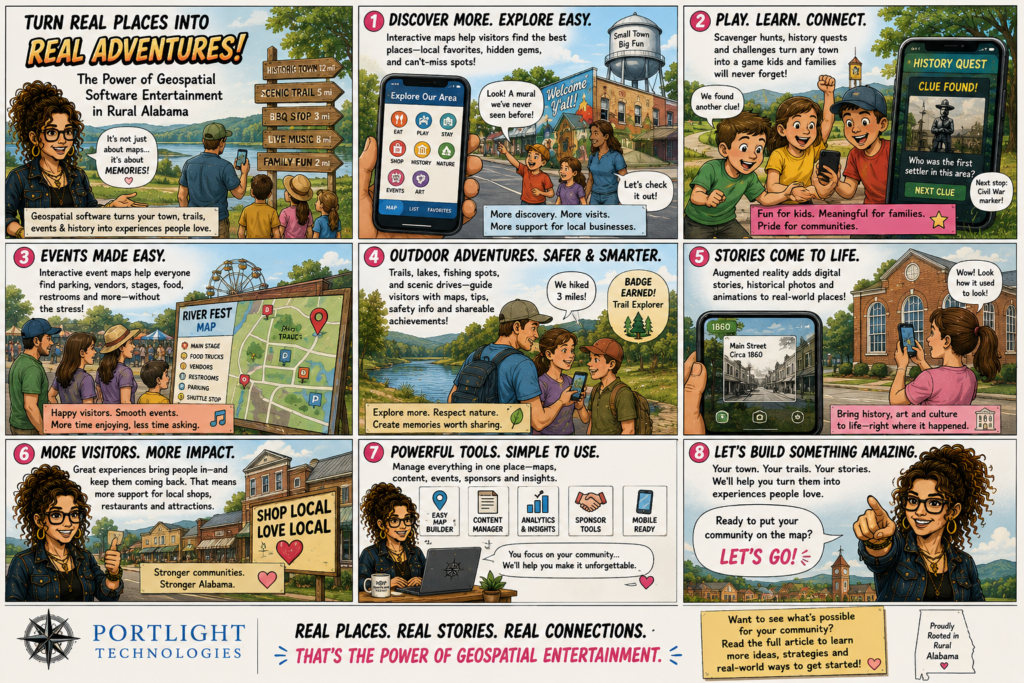
Geospatial software is often associated with mapping, logistics, construction, agriculture, and emergency response. But in rural Alabama, there’s a growing role for geospatial software entertainment—from interactive tourism maps and outdoor adventure apps to location-based games, event discovery tools, and augmented reality experiences. This technology can help rural communities create more engaging experiences for residents and visitors.
What Is Geospatial Software?
Geospatial software uses location data to help people understand, navigate, and interact with physical places. It can include GPS mapping, mobile apps, interactive web maps, drones, satellite imagery, location-based alerts, augmented reality, and data dashboards.
For entertainment purposes, geospatial software entertainment can turn real-world locations into digital experiences. A small town, trail system, lake, historic district, festival ground, or scenic drive can become part of an interactive story, game, guide, or attraction.
Why Rural Alabama Is a Strong Fit
Rural Alabama has natural beauty, history, music, food, outdoor recreation, cultural landmarks, and community events. Many of these assets are spread across large areas and may not be easy for visitors to discover without local knowledge. Geospatial software can make those experiences easier to find and more enjoyable.
Potential uses include:
- Interactive tourism maps that highlight restaurants, historic sites, trails, public art, festivals, and scenic stops.
- Location-based games such as scavenger hunts, history quests, or family-friendly town challenges.
- Outdoor recreation guides for fishing areas, hiking trails, birding routes, paddling locations, and hunting-related visitor services where appropriate.
- Event navigation tools for county fairs, music festivals, rodeos, markets, and sports tournaments.
- Augmented reality experiences that add digital storytelling to museums, downtown districts, heritage trails, and parks.
- Film and content production maps that help creators find rural locations for photography, video, and independent media projects.
Entertainment Ideas Using Geospatial Software Entertainment
1. Rural Adventure Trails
A mobile-friendly map could guide visitors through a themed route, such as barbecue stops, civil rights history, lake recreation, haunted history, murals, music heritage, or small-town shopping. Each stop could include photos, short videos, audio stories, coupons, and check-in rewards. According to research from Harvard’s GIS Lab, location-based digital experiences increase visitor engagement by up to 40%.
2. Digital Scavenger Hunts
Families, schools, churches, and tourists could use a geospatial app to complete challenges around town. These experiences can be built around local history, nature, sports, or seasonal events.
3. Festival and Event Maps
Rural events often rely on temporary parking, vendor rows, stage areas, food trucks, restrooms, and shuttle stops. A simple interactive map improves the visitor experience while helping organizers promote sponsors and vendors.
4. Outdoor Recreation Experiences
Alabama’s rural areas offer lakes, rivers, forests, trails, and open landscapes. Geospatial entertainment tools can support guided routes, achievement badges, safety information, and shareable trip memories.
5. Augmented Reality Storytelling
AR experiences let visitors point a phone at a landmark and see historical photos, character narration, trivia, or animations. This approach makes museums, heritage sites, and downtown walking tours more engaging without requiring major physical construction.
How to Market Geospatial Software Entertainment in Rural Alabama
Start With Local Partnerships
The best marketing strategy is not only digital. Rural markets are relationship-driven. Software providers should connect with chambers of commerce, tourism boards, county commissions, schools, libraries, parks departments, local business associations, festival organizers, and Main Street programs.
Sell the Outcome, Not the Technology
Many potential customers may not search for “geospatial software.” Instead, they care about attracting visitors, increasing event attendance, helping people find local businesses, keeping families engaged, or promoting local history. Marketing should focus on those practical outcomes.
Create a Small Demonstration Project
A pilot project can be more persuasive than a long sales presentation. For example, a simple interactive map of a downtown event, a short heritage trail, or a weekend scavenger hunt shows local leaders exactly how the tool works. Demonstrating geospatial software entertainment in action builds confidence and speeds adoption.
Use Local Stories in Content Marketing
Case studies, short videos, interviews, and before-and-after examples show how the software supports real communities. Highlight local business owners, event organizers, artists, historians, students, and visitors. Forbes’ guide to location-based marketing confirms that authentic storytelling drives higher engagement in rural markets.
Offer Simple Pricing
Rural organizations often work with limited budgets and grant cycles. Clear packages make adoption easier. Options might include a one-time event map, a seasonal tourism campaign, or a yearly community experience platform.
Promote Through Facebook, Local Media, and Community Networks
In many rural communities, Facebook groups, local radio, church bulletins, school newsletters, newspapers, and community calendars remain powerful channels. Marketing should combine online advertising with trusted local communication networks.
Make Sponsors Part of the Model
Local banks, restaurants, utilities, healthcare providers, colleges, and regional employers may sponsor maps, trails, badges, prizes, or event features. Sponsorship helps make the software affordable for small towns and nonprofits.
Key Audiences to Target
- County and city tourism offices
- Chambers of commerce
- Festival and event organizers
- Parks and recreation departments
- Museums and historical societies
- Schools, colleges, and youth programs
- Outdoor recreation businesses
- Local retailers and restaurants
- Regional economic development groups
Practical Marketing Message
A strong message might be: “Turn your town, trail, festival, or historic site into an interactive experience visitors can explore from their phones.”
This message is simple, benefit-focused, and easy for nontechnical audiences to understand.
Final Thoughts
Geospatial software entertainment can help rural Alabama communities make their attractions more discoverable, interactive, and marketable. The strongest opportunities are likely to come from projects that combine local culture, outdoor recreation, tourism, events, and storytelling.
To market this kind of software successfully, providers should avoid leading with technical jargon. Instead, they should show how maps, location data, and mobile experiences help communities bring more people to local places, support small businesses, and create memorable experiences rooted in Alabama’s rural identity.